
Blog
Can Muriatic Acid Remove Calcium From Pool Tile?
Quick Answer:
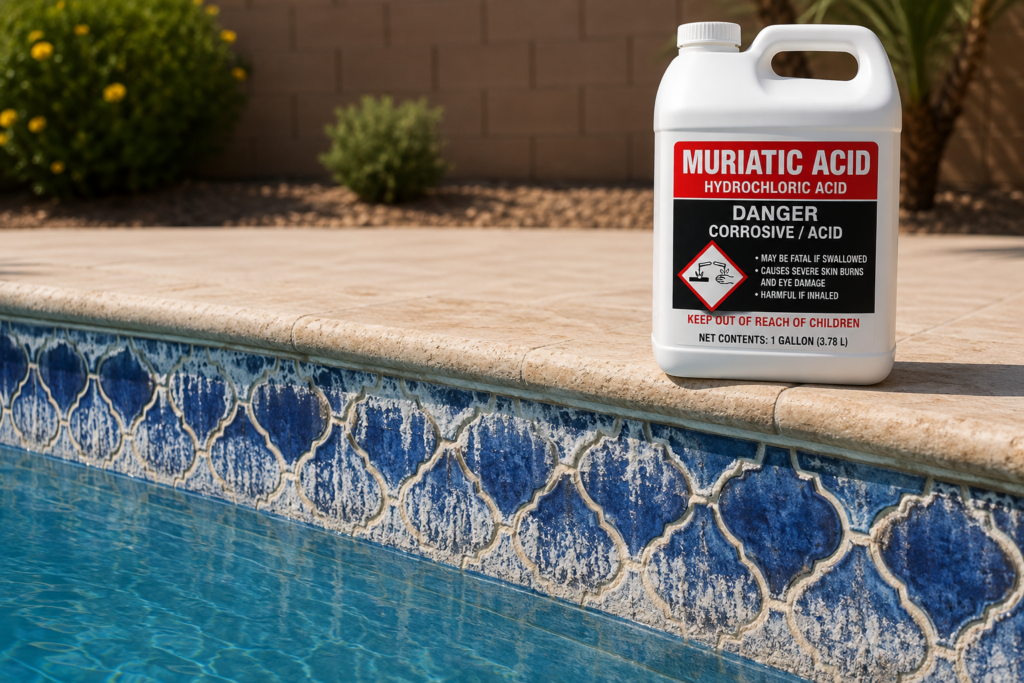
Muriatic acid may dissolve some calcium deposits on pool tile, but it is highly corrosive and can damage certain tile surfaces, grout, stone, and surrounding materials. Improper use can also create serious safety risks. For these reasons, Arizona Bead Blasting does not recommend muriatic acid as a DIY method for removing calcium from pool tile.

Why We Don’t Recommend Muriatic Acid for Pool Tile
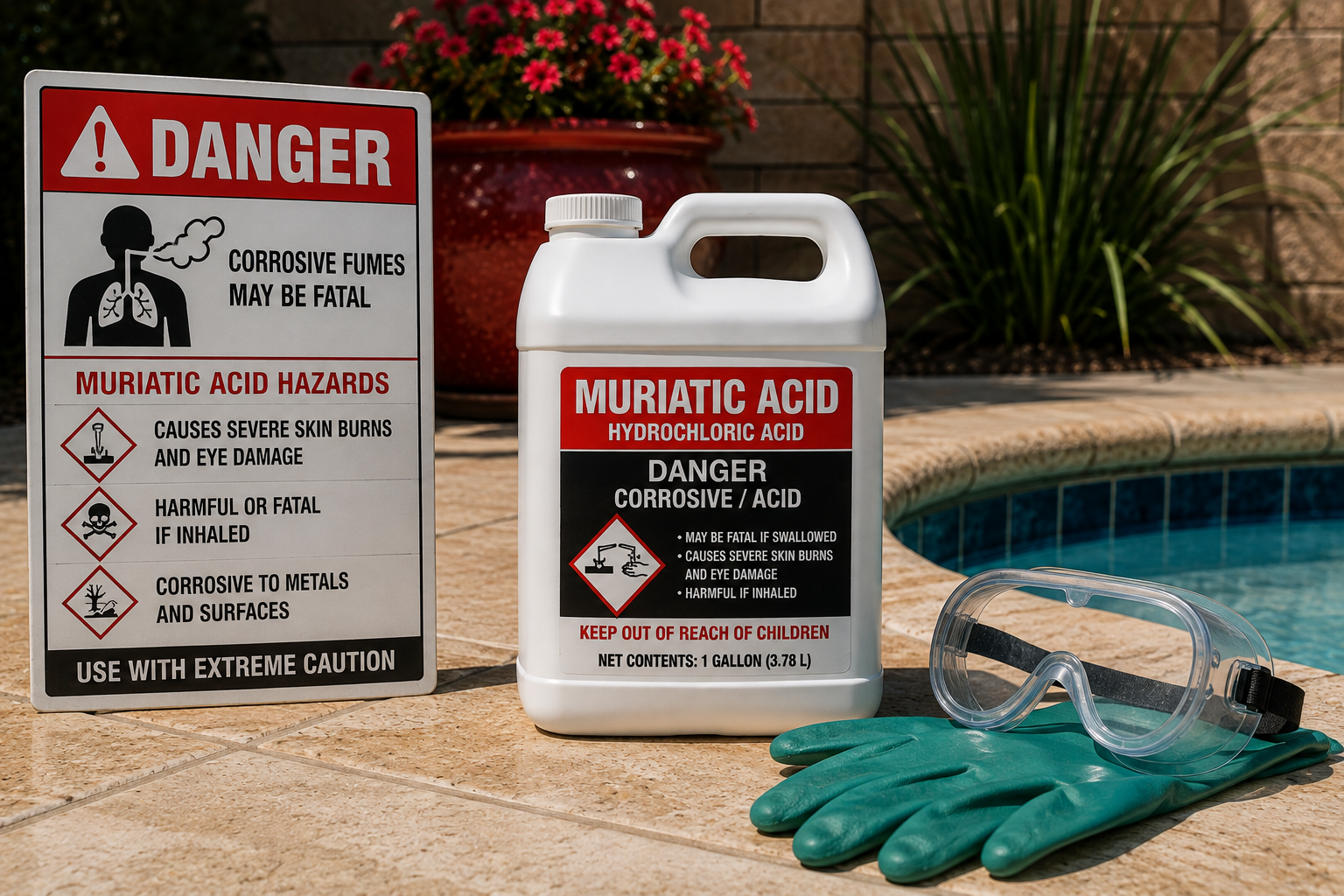
Muriatic Acid Can Be Risky
- May etch or permanently damage certain pool tile
- May discolor or weaken grout
- Can damage natural stone and other surrounding surfaces
- Highly corrosive to skin and eyes
- Acid fumes can be hazardous
- Splashes can damage nearby metal and equipment
- Results can vary depending on the type of calcium and pool surface
What Can Muriatic Acid Damage?
1. Pool Tile and Decorative Finishes
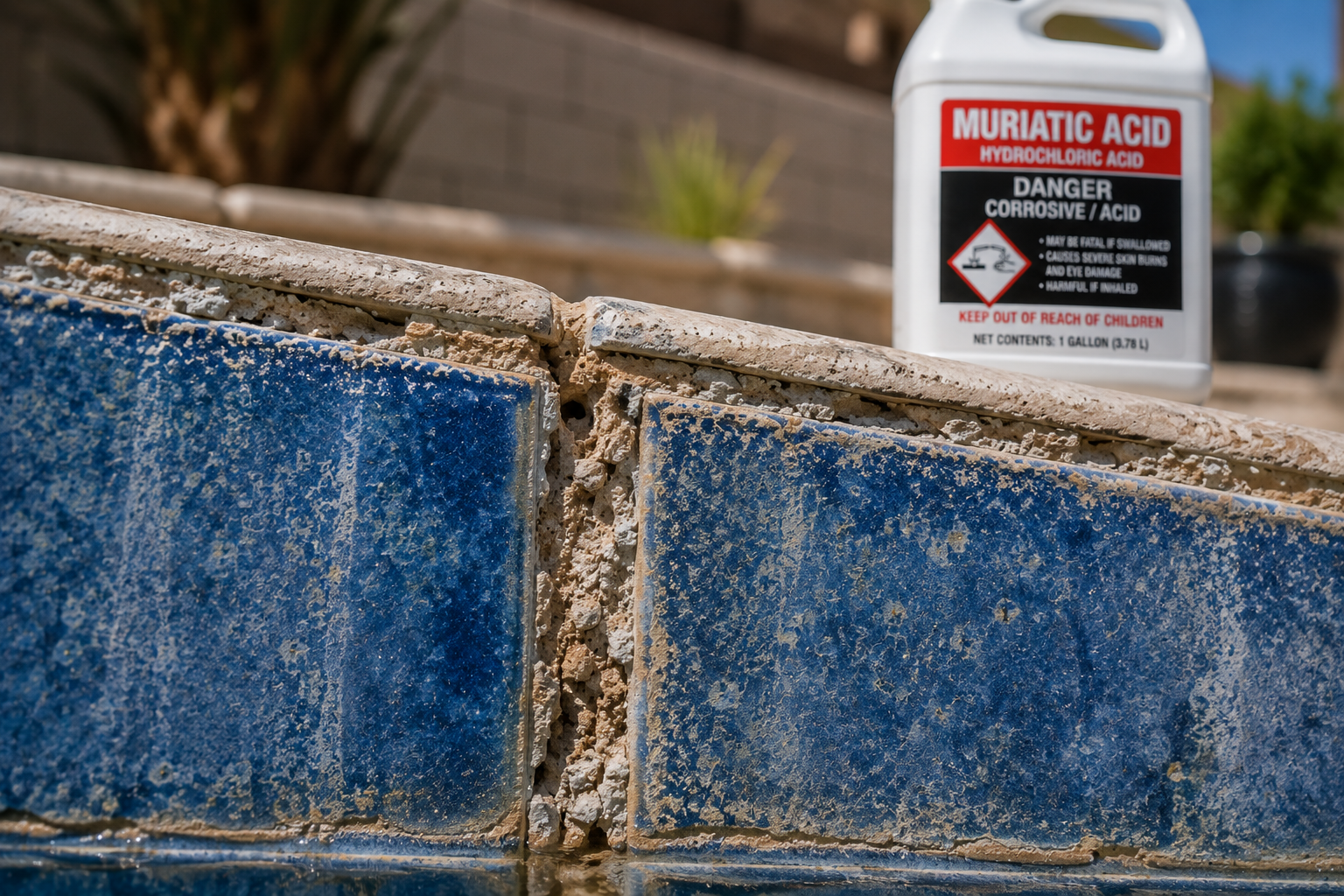
Muriatic acid is highly corrosive and may etch, discolor, dull, or permanently damage certain pool tile surfaces and decorative finishes. The risk can vary depending on the material, finish, condition of the tile, and strength of the product being used.
2. Grout and Mortar Joints
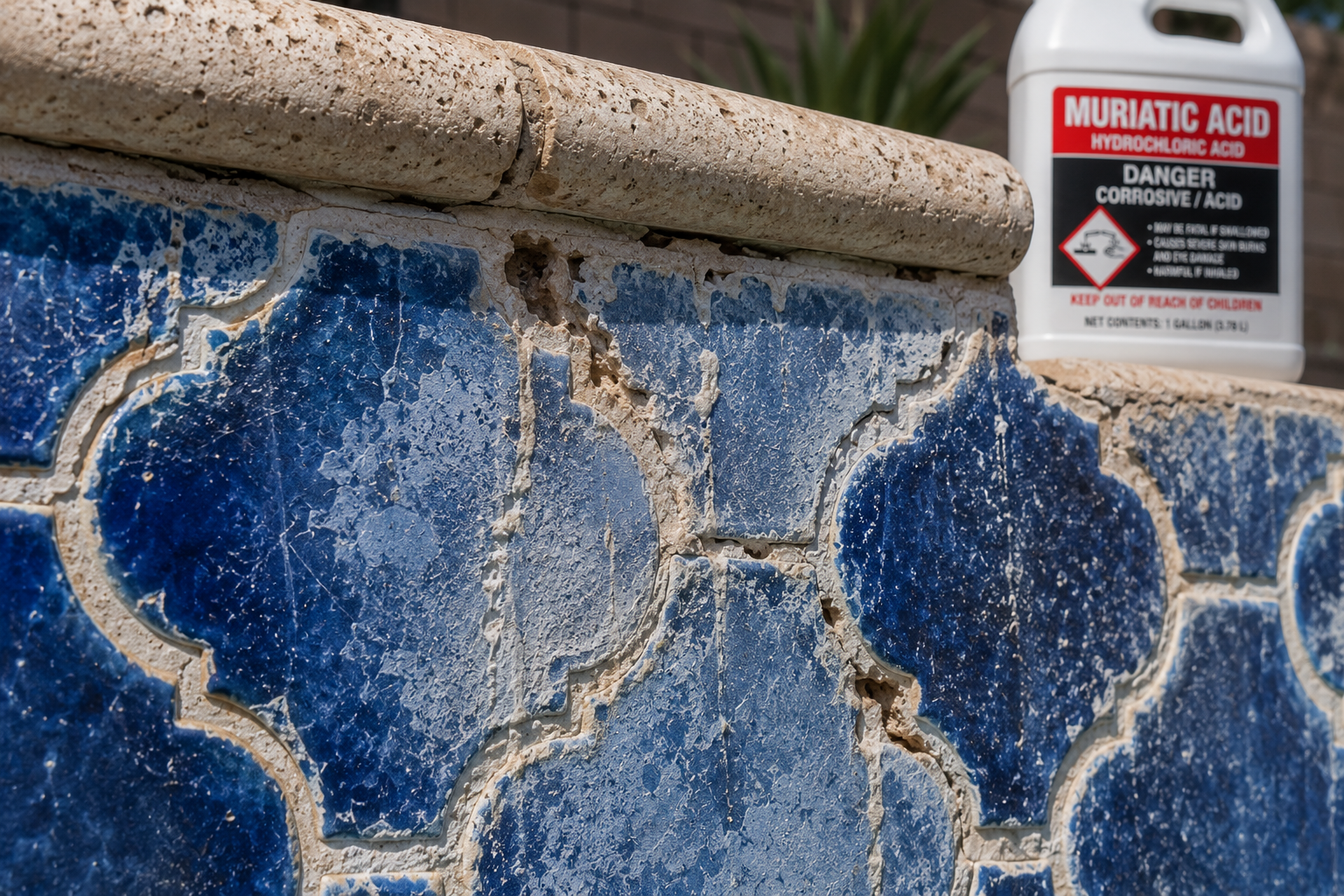
Muriatic acid may weaken, discolor, or erode cement-based grout and mortar joints between pool tiles. Damage may not always be immediately noticeable, and repeated or improper exposure can contribute to deterioration over time.
3. Natural Stone and Pool Surroundings
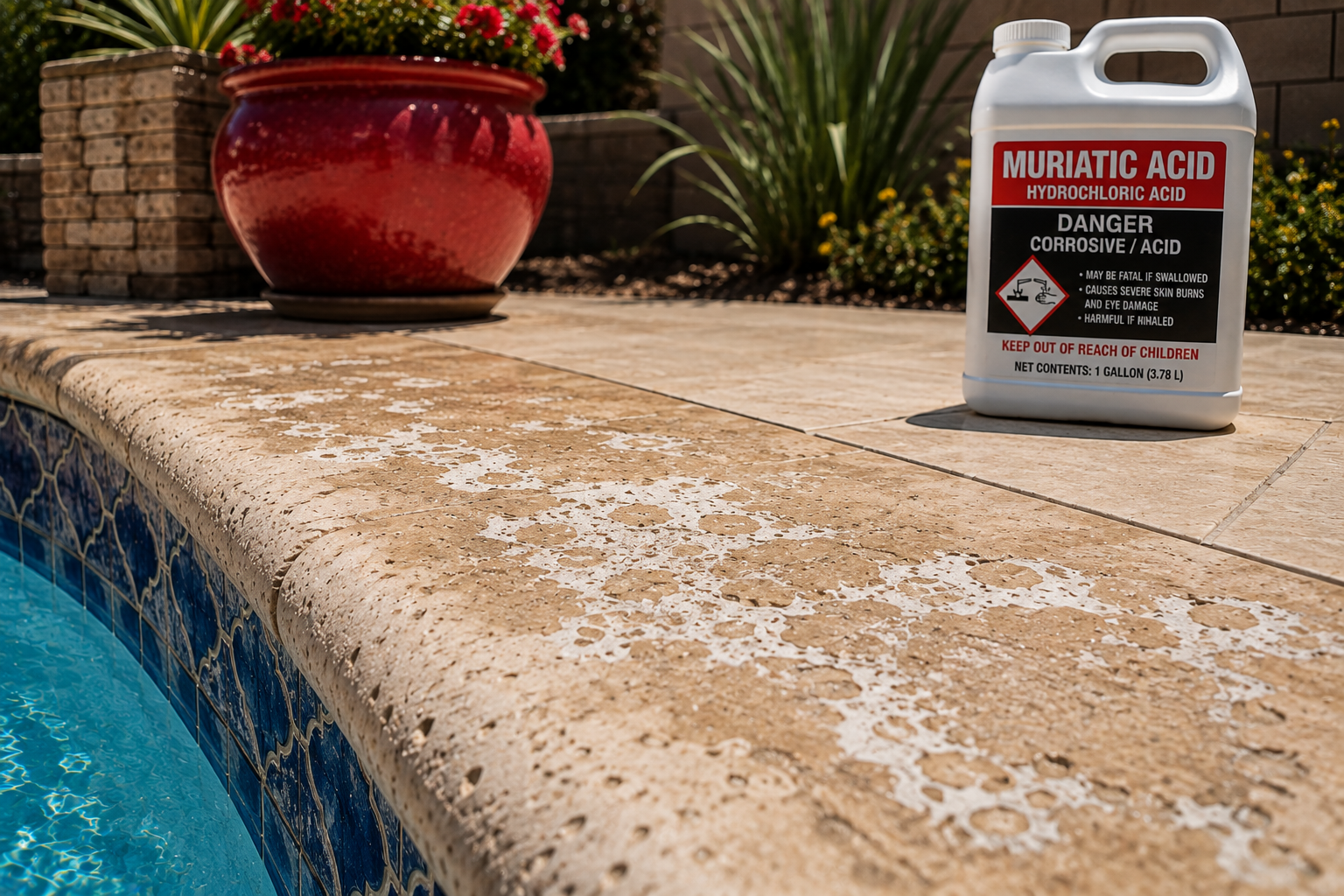
Muriatic acid may etch or discolor natural stone, coping, decking, and other materials surrounding the pool. Even an accidental splash can leave permanent marks or damage on surfaces that were never intended to come in contact with acid.
4. Personal Safety and Acid Fumes
Muriatic acid is highly corrosive and can cause serious burns to skin and eyes. Its fumes can also irritate the eyes and respiratory system. Because accidents can happen quickly when handling strong acid around a swimming pool, Arizona Bead Blasting does not recommend it as a DIY pool tile cleaning method.
Will Muriatic Acid Remove Heavy Calcium From Pool Tile?
Muriatic acid may dissolve some calcium deposits, but heavy, hardened calcium scale can be difficult to remove and results can vary depending on the type of buildup and pool surface. Using a stronger acid solution or repeatedly applying acid can increase the risk of damaging the tile, grout, and surrounding materials.
For heavy calcium buildup around the pool waterline, professional pool tile cleaning is generally a safer approach than experimenting with highly corrosive chemicals.
When to Call a Professional Pool Tile Cleaner
If calcium buildup covers a large portion of the pool waterline, has become thick and hardened, or is on a surface that could be damaged by acid, professional cleaning may be the better option. Specialized equipment and cleaning media can remove stubborn calcium without relying on highly corrosive acids.
Arizona Bead Blasting uses professional glass bead blasting and salt blasting methods designed for different types of pool tile and calcium buildup. These methods allow us to remove stubborn calcium and hard-water scale safely and efficiently without draining the entire pool.
Need Help Removing Calcium From Your Pool Tile?
If you’re dealing with stubborn calcium buildup and would rather not risk damaging your pool tile with muriatic acid, Arizona Bead Blasting can help. We professionally remove calcium and hard-water scale from pool tile throughout the Phoenix metro area using cleaning methods designed for different tile surfaces.
Call us today for a free quote and find out what it will take to get your pool tile looking clean again.