
Blog
What Causes Calcium Buildup on Pool Tile?
Quick Answer:
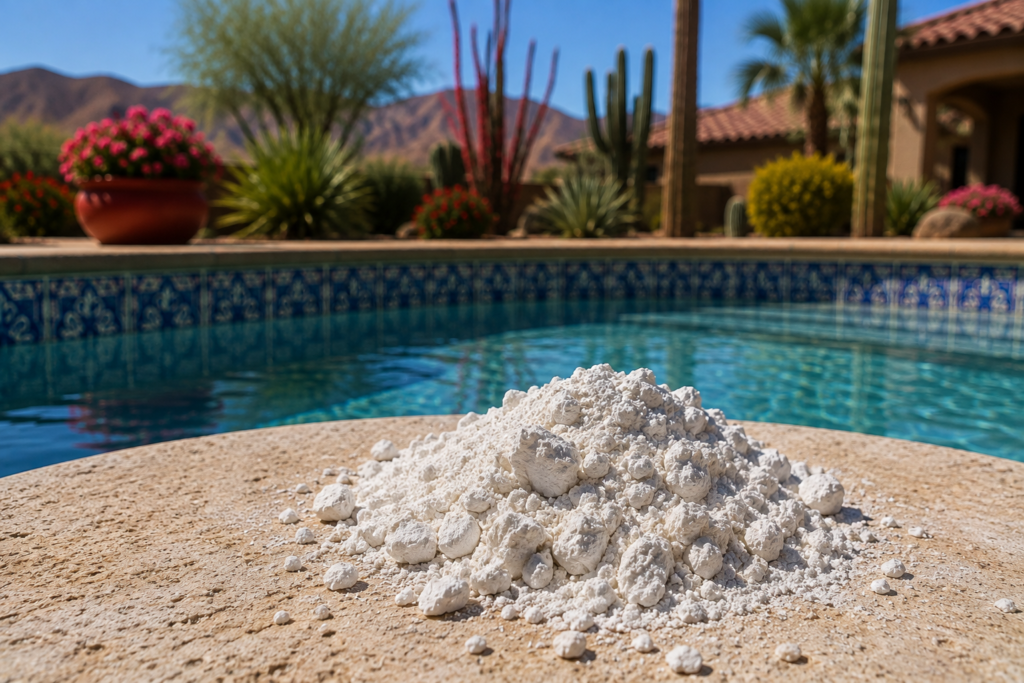
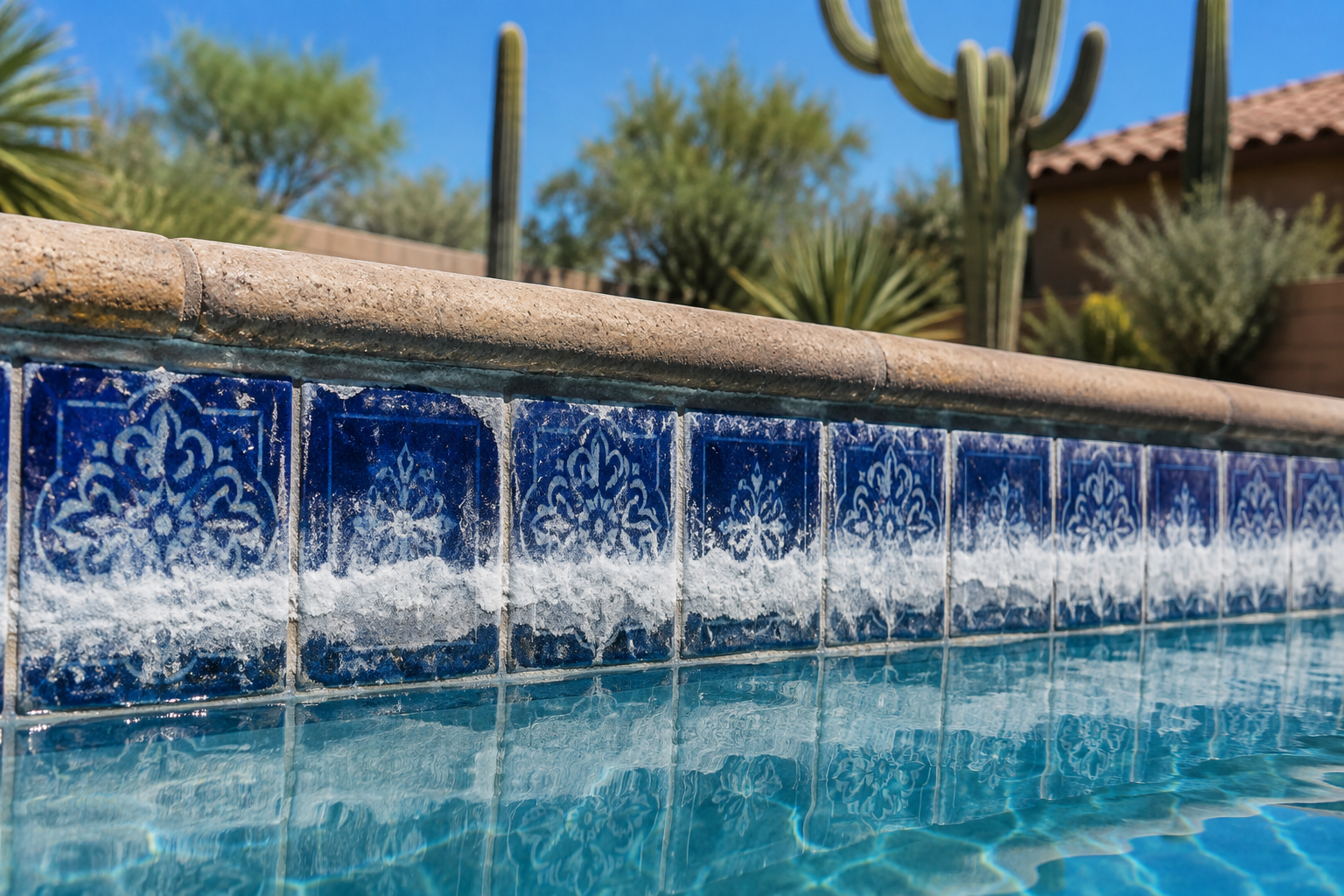
Calcium buildup on pool tile is caused by minerals in swimming pool water becoming concentrated and depositing along the waterline. In Arizona, hard water, high evaporation rates, and changes in pool water chemistry can make calcium buildup especially common. Over time, these minerals can form the white, crusty deposits commonly seen around swimming pool tile.
Why Calcium Builds Up on Pool Tile
Common Causes of Calcium Buildup
- Hard, mineral-rich Arizona water
- High evaporation rates
- High calcium hardness
- High pH or alkalinity
- Repeatedly adding hard fill water
- Minerals concentrating at the pool waterline
What Causes Calcium Buildup on Pool Tile?
1. Arizona’s Hard Water
Arizona water naturally contains dissolved minerals, including calcium. Each time water is added to your swimming pool, more minerals are introduced. As pool water evaporates, the water disappears but the minerals remain behind, gradually increasing the potential for calcium buildup on the pool tile.
2. Arizona’s High Evaporation Rate
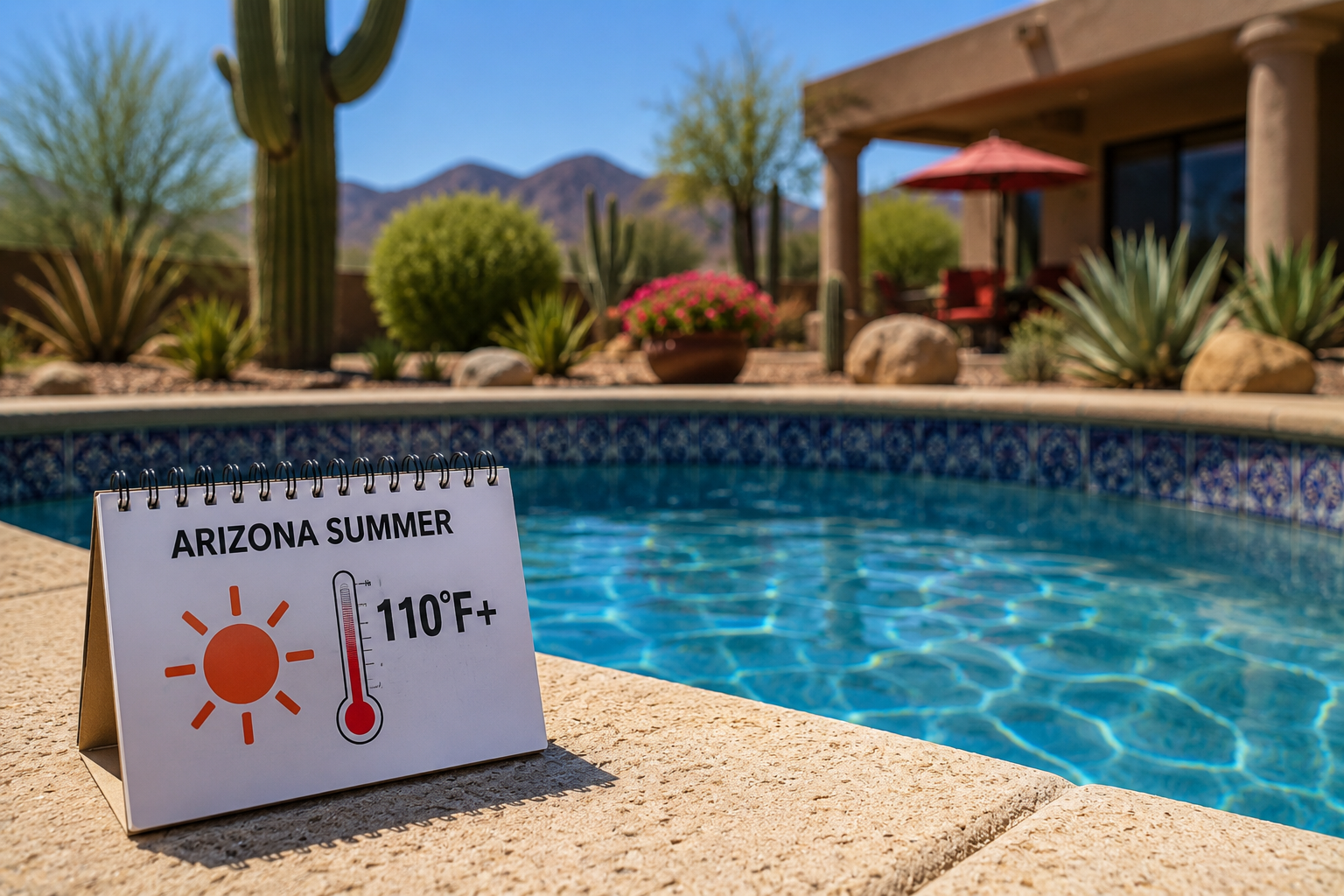
Arizona’s hot, dry climate causes swimming pool water to evaporate quickly, especially during the summer months. When water evaporates, calcium and other dissolved minerals do not evaporate with it. They remain in the pool and become more concentrated, making calcium deposits more likely to form along the tile waterline.
3. High Calcium Hardness
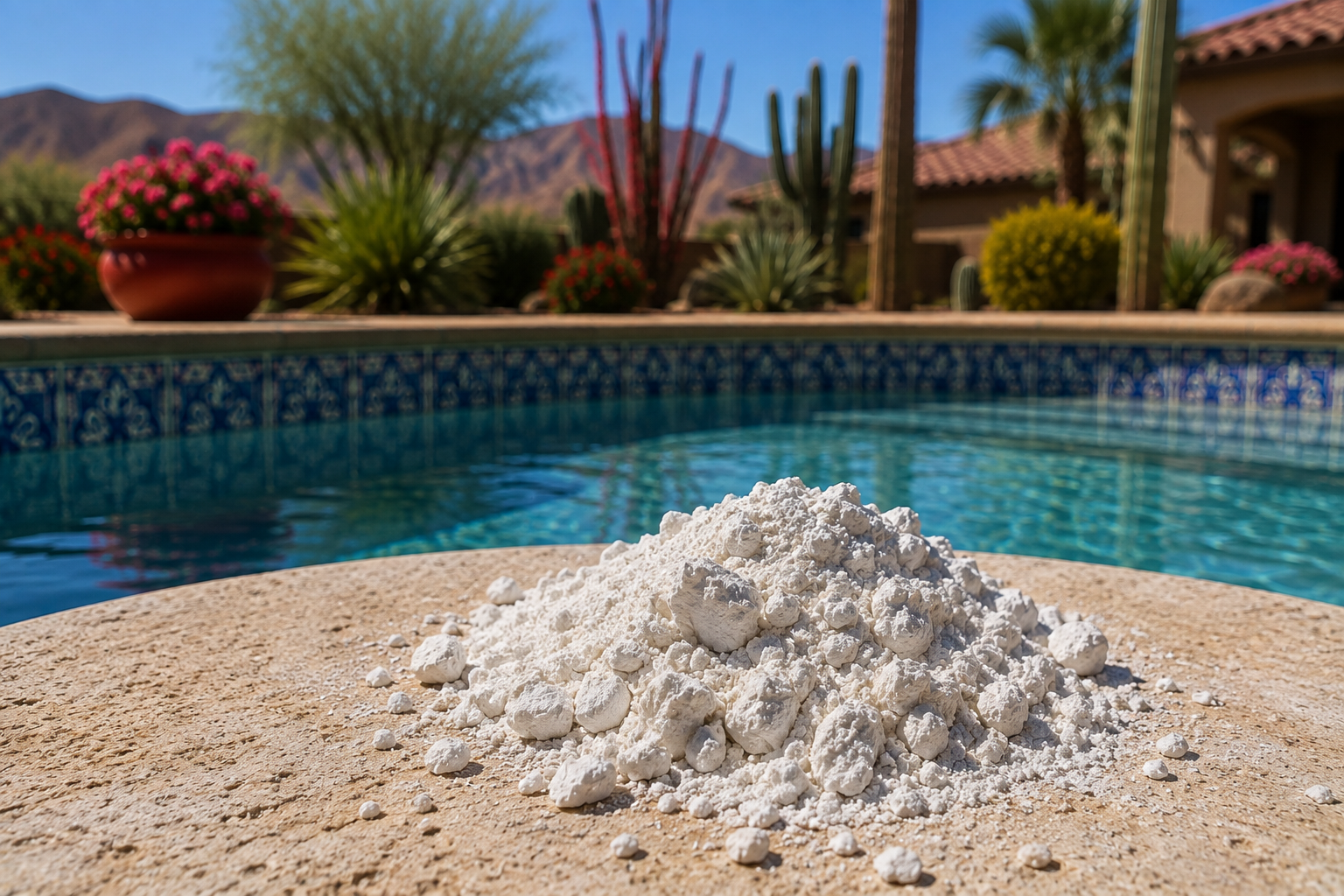
Arizona swimming pools are often filled and topped off with mineral-rich water containing naturally occurring calcium. As this water repeatedly enters the pool and then evaporates, the calcium stays behind and can become increasingly concentrated. When calcium hardness becomes too high, especially when combined with high pH or alkalinity, calcium can begin depositing onto the pool tile and forming the stubborn white scale commonly seen around the waterline.
4. High pH and Alkalinity
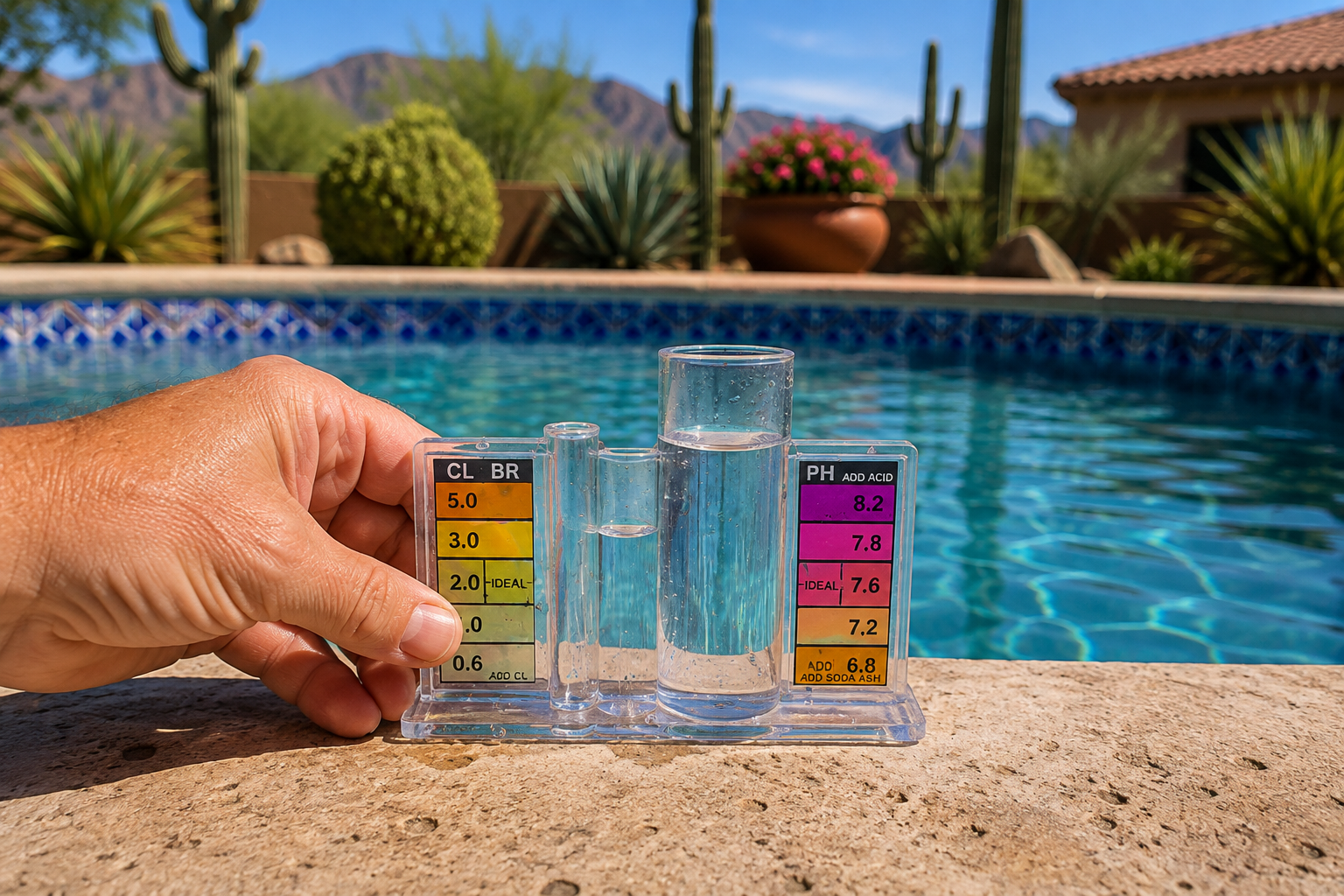
When pool water has high pH or alkalinity, calcium is more likely to come out of solution and attach to pool tile and other surfaces. Combined with Arizona’s hard water and high evaporation rates, improper water balance can accelerate calcium scale formation around the waterline.
Why the calcium forms at the waterline
The pool waterline is where water, air, heat, and evaporation constantly meet. As pool water evaporates from the tile surface, dissolved calcium and other minerals are left behind. Repeated evaporation can gradually create layers of mineral deposits along the tile.
Arizona’s hot, dry climate makes this process especially noticeable. Over time, the deposits can harden and create the familiar white calcium line around the swimming pool.
Why Does Calcium Keep Coming Back After Cleaning?
Cleaning pool tile removes the existing calcium deposits, but it does not remove the dissolved minerals from the pool water. Arizona’s mineral-rich water and constant evaporation continue to concentrate calcium in the pool. As water is replaced and evaporates again, new calcium deposits can gradually begin forming along the waterline.
Regular water testing and proper pool chemistry can help slow calcium buildup, but in Arizona it can be difficult to prevent completely. Periodic professional pool tile cleaning can remove accumulated calcium and restore the appearance of the tile when buildup returns.
Need Help Removing Calcium From Your Pool Tile?
If calcium buildup has returned to your pool tile, Arizona Bead Blasting can help. We professionally remove calcium and hard-water scale from pool tile throughout the Phoenix metro area using cleaning methods designed for different tile surfaces.
Call us today for a free quote and find out what it will take to get your pool tile looking clean again.