
Arizona Pool Calcium Hardness: Why Buildup Happens
Arizona Pool Calcium Hardness: What Causes Waterline Buildup?
Why Arizona's hard water leaves stubborn calcium deposits on swimming pool tile — and what pool owners can do about it.
Beautiful Pools. Tough Water.
Arizona has plenty of sunshine. Unfortunately, it also has some seriously mineral-rich water.
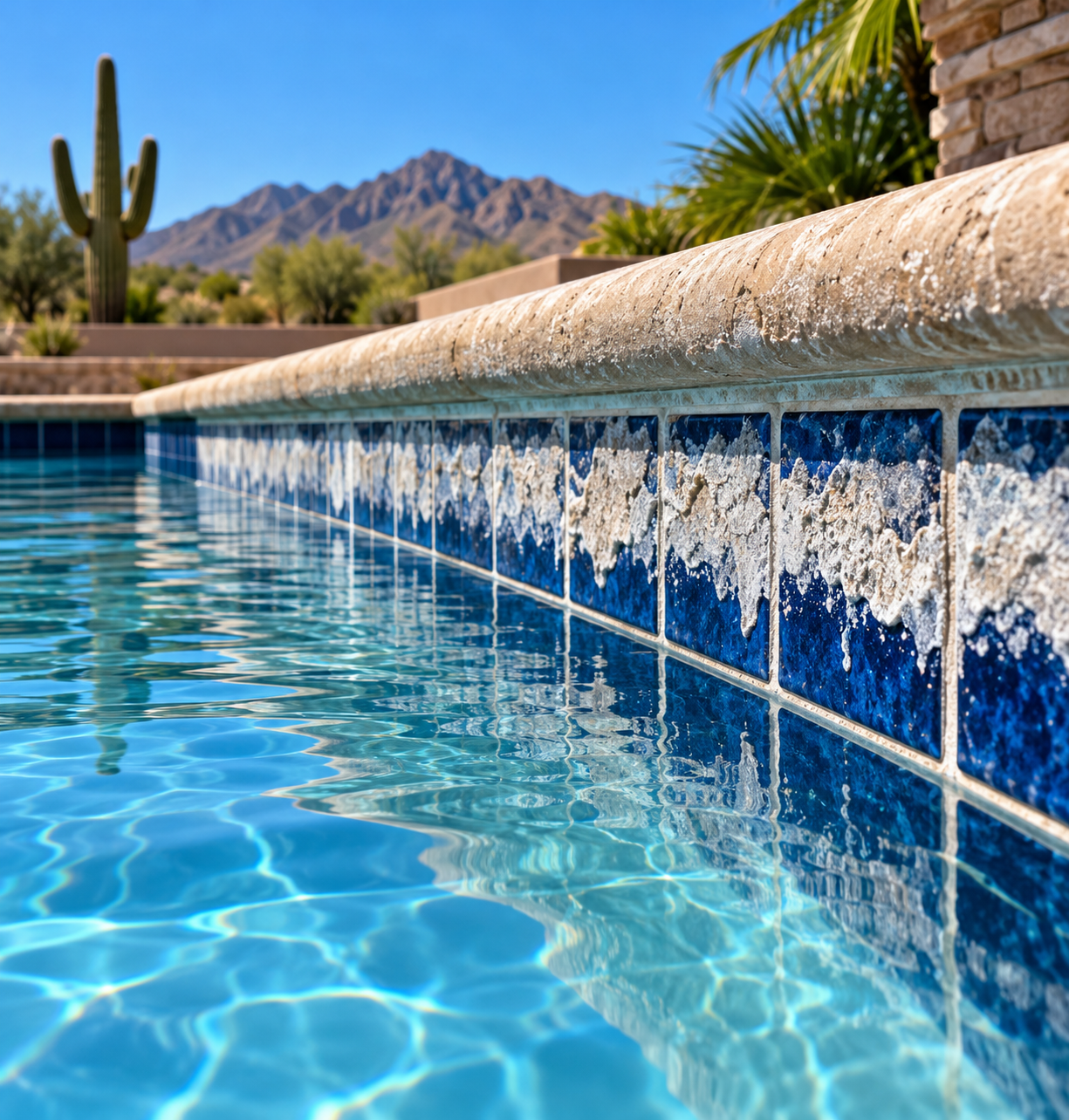
If you've noticed white, crusty deposits forming along your swimming pool's waterline, you're seeing a common result of calcium scaling.
Understanding calcium hardness is an important part of maintaining your swimming pool. Balanced water chemistry helps reduce scaling, protects equipment, and keeps your pool looking its best.
What Exactly Is Calcium Hardness?
Calcium hardness measures the amount of dissolved calcium in swimming pool water. Along with pH and total alkalinity, it plays an important role in overall water balance.
When calcium hardness is too low, water can become aggressive toward certain pool finishes. When it becomes excessive, particularly alongside elevated pH and alkalinity, calcium carbonate scale may begin forming.
Many swimming pools operate within a calcium hardness range of approximately 200–400 parts per million (ppm). However, the appropriate range depends on pool surface, water temperature, and overall chemistry.
Calcium hardness alone doesn't tell the whole story. pH, alkalinity, temperature, and other conditions influence whether pool water is more likely to form scale.
How Arizona's Hard Water Becomes Calcium Buildup
Arizona's dry climate makes swimming pools especially vulnerable to rising mineral concentrations. Here's the basic process.
Minerals Enter the Pool
Arizona fill water contains dissolved minerals, including calcium. Each refill can introduce additional minerals into the pool.
Water Evaporates
Arizona's heat and dry air accelerate evaporation. Water escapes, but dissolved minerals remain behind, increasing their concentration.
Deposits Begin Forming
When water chemistry favors scaling, calcium can form stubborn deposits on pool tile, water features, and other surfaces.
Why Does Calcium Collect Along Pool Tile?
The waterline is constantly exposed to changing water levels, splashing, and evaporation.
As mineral-rich water repeatedly wets and dries against tile, deposits can become particularly visible along this narrow band.
What begins as a light white residue may gradually develop into a thick, hardened layer that ordinary brushing cannot easily remove.
Calcium Doesn't Stop at the Waterline
Calcium deposits can affect several swimming pool surfaces, including:
Scaling may also develop inside heaters, plumbing, and other equipment. Heavy mineral accumulation can reduce water flow and interfere with efficient equipment operation.
Three Ways to Help Reduce Calcium Scaling
Test Your Water
Monitor calcium hardness along with pH and alkalinity. Your pool professional can recommend a testing schedule appropriate for your pool.
Maintain Proper Balance
Balanced water chemistry helps reduce conditions that encourage calcium carbonate scaling.
Manage Mineral Levels
When hardness becomes excessive, appropriate water replacement or professional water treatment may help reduce mineral concentration.
Proper water chemistry can help limit new scaling, but it generally won't remove thick deposits already bonded to swimming pool tile.
Removing Existing Calcium From Swimming Pool Tile
Once calcium deposits harden along the waterline, regular brushing and routine maintenance may not be enough to remove them.
Arizona Bead Blasting specializes in professional pool tile cleaning and calcium removal throughout Chandler, Gilbert, Mesa, Queen Creek, Tempe, and San Tan Valley.
We select cleaning methods appropriate for the surface, including salt blasting and other specialized techniques designed to remove stubborn mineral deposits while protecting the underlying tile and finish.
Arizona Hard Water Is a Fact of Life. Heavy Calcium Buildup Doesn't Have to Be.
Regular water testing, balanced chemistry, and appropriate maintenance can help minimize scaling. When stubborn deposits have already formed, professional calcium removal can help restore the appearance of your swimming pool tile.
Request a Free Quote